From the Desk of the Experts
Here we have resources designed to help building owners and operators better understand energy usage, system performance, compliance requirements, and long-term operational planning.
Building performance and emissions regulations are rapidly evolving across major cities and states, with increasing pressure on existing buildings to improve efficiency, reduce emissions, and meet aggressive compliance targets. Many jurisdictions are implementing stricter benchmarking, reporting, and carbon reduction requirements, often accompanied by significant financial penalties for noncompliance.
Today’s Complex Building Performance Standards
Explore the map below to better understand how building performance regulations are developing across different regions and what they may mean for long-term operational planning.

Get Expert
Compliance Support
We know that these regulations are difficult to plan for and ever harder to implement. We provide support for Local Laws 84, 87, 88, 95, and 97, including energy benchmarking, emissions reporting, and carbon reduction planning designed to help avoid penalties and support long-term building performance.
Understand How Our Services Can Help You Achieve Long-Term Success with these Articles
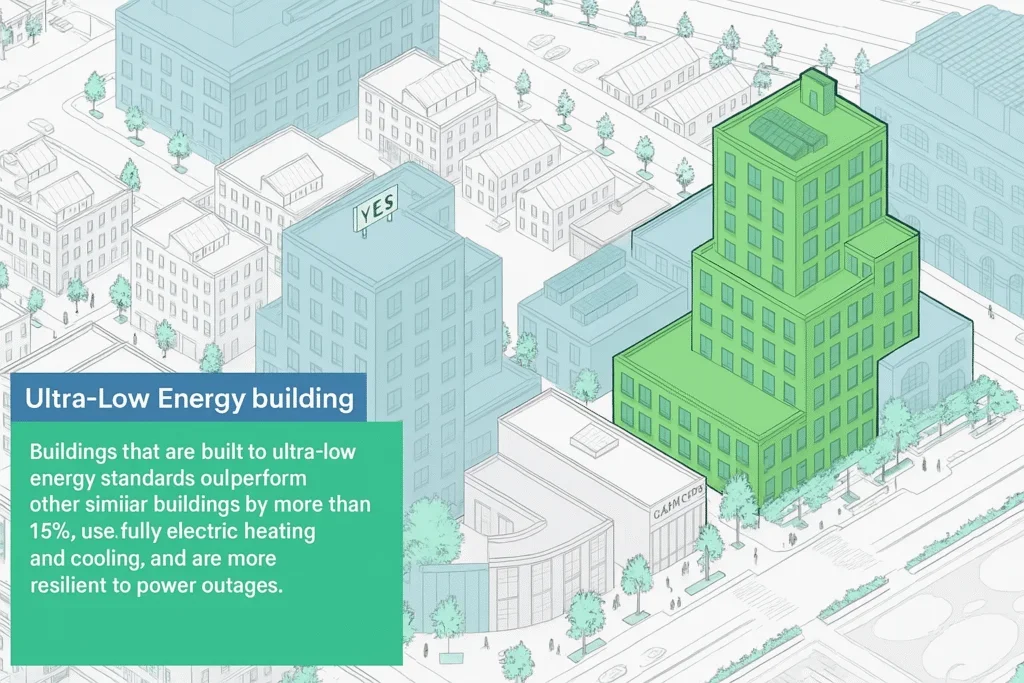
What is ULEB & Why It Matters
Learn how energy modeling and ULEB analysis support building performance planning, emissions forecasting, and long-term operational strategy for commercial properties.
Ask Us Anything
-
An energy audit is a detailed assessment of how a building consumes energy. It identifies inefficiencies in systems like heating, ventilation, air conditioning, and lighting, with the goal of reducing consumption without sacrificing occupant comfort. The process helps to lower operational costs and reduce a building’s environmental footprint.
-
Beyond ensuring compliance, a comprehensive energy audit provides significant benefits, including:
Improving energy efficiency and lowering utility bills.
Enhancing occupant comfort and satisfaction.
Extending the life of mechanical systems.
Improving indoor air quality and building durability.
Increasing overall property value.
-
Several local laws target large buildings. The main ones include:
Local Law 97: Applies to most buildings over 25,000 sq. ft. and mandates progressively stricter carbon emissions limits.
Local Law 87: Requires buildings over 50,000 sq. ft. to undergo an energy audit and retro-commissioning every 10 years.
Local Law 84/133: Mandates annual energy and water usage benchmarking for buildings 25,000 sq. ft. and above.
Local Law 95: Requires buildings over 25,000 sq. ft. to publicly display their Energy Efficiency Grade each year.
-
Failure to comply with LL97 comes with steep annual penalties, most notably a fine of $268 per metric ton of CO₂e that a building is over its emissions limit. There are additional penalties for failing to file reports on time.
-
The initial on-site inspection, where our certified auditors take measurements and interview facility staff, typically takes between two to four hours to complete.
-
Retro-commissioning is the process of analyzing and fine-tuning the systems in an existing building to restore or improve their operational performance. It is a key part of Local Law 87 compliance and helps to fine-tune system operations for maximum efficiency.
-
Yes, we offer comprehensive services that include energy auditing, Local Law compliance, testing and balancing, commissioning, and ongoing support to ensure your success at every stage.
-
We have completed over 500 LL97 & LL88 building inspections and filings and none got any violations to date. Our perfect compliance record demonstrates our commitment to thorough, accurate assessments and proper regulatory submissions for every client.