
What is ULEB & Why It Matters
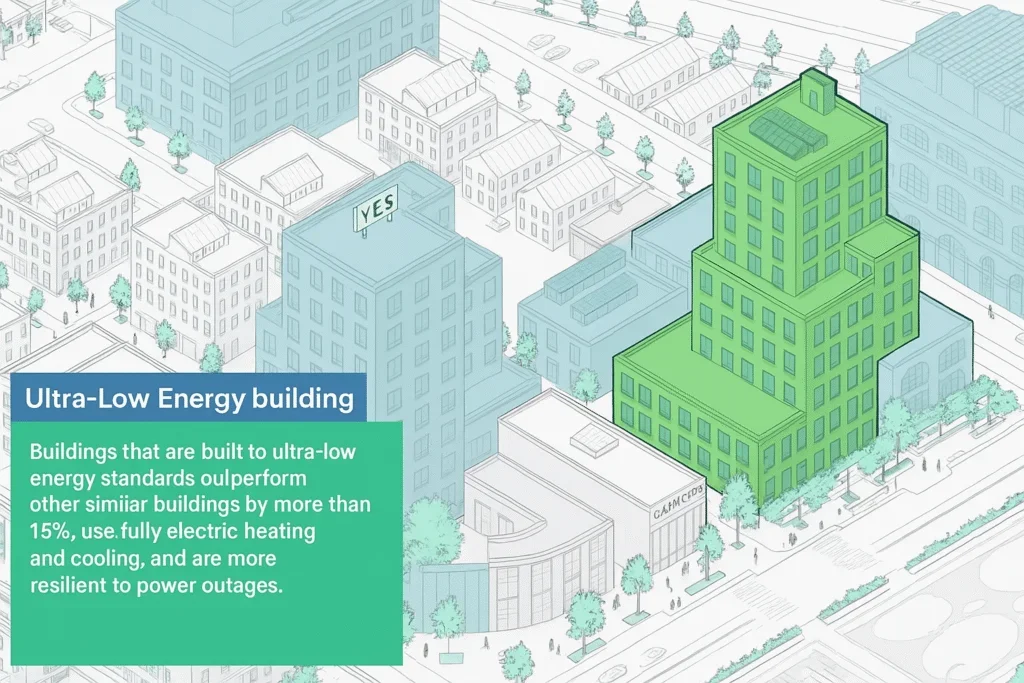
Image Source: https://ulebnyc.com/uleb-ultra-low-energy-building/
What is ULEB & Why It Matters
In NYC, ULEB (Ultra-Low Energy Building) is a zoning incentive that allows new or retrofitted buildings to earn up to 5% additional Floor Area Ratio (FAR) when they exceed energy-code baselines if they meet rigorous performance thresholds.
ULEB encourages buildings to be more efficient, further electrified, and future-proofed even in tight urban lots while offering financial upside to developers.
The ULEB Advantage: Turn Compliance into Profitability
Why just meet the minimum requirements when you can lead the way? By designing your project as an Ultra-Low Energy Building (ULEB), you can unlock significant financial incentives, most notably a 5% Floor Area Ratio (FAR) bonus. This translates directly to more leasable space and a substantial increase in your property’s value.
Our advanced building performance simulations provide the critical data needed to achieve ULEB status and secure DOB approval. We use specialized software to:
Optimize System Design: Analyze and select the most efficient HVAC, lighting, and building envelope systems tailored to your project.
Evaluate Retrofit Strategies: Identify the most cost-effective upgrades to dramatically reduce energy consumption in existing buildings.
Forecast Emissions for LL97: Provide precise emissions calculations to ensure you meet Local Law 97 targets and avoid costly penalties.
Secure Your FAR Bonus: Deliver the comprehensive modeling and documentation required to successfully claim your 5% FAR incentive.
Why Choose MRO tech NY?
NYC Experts: We possess an in-depth, practical understanding of New York City’s complex building codes and energy laws.
Proven Results: Our portfolio includes successful projects that have achieved significant energy savings and financial returns for our clients.
Client-Focused Approach: We collaborate closely with you to develop customized, data-driven solutions that align with your project’s specific needs and goals.